

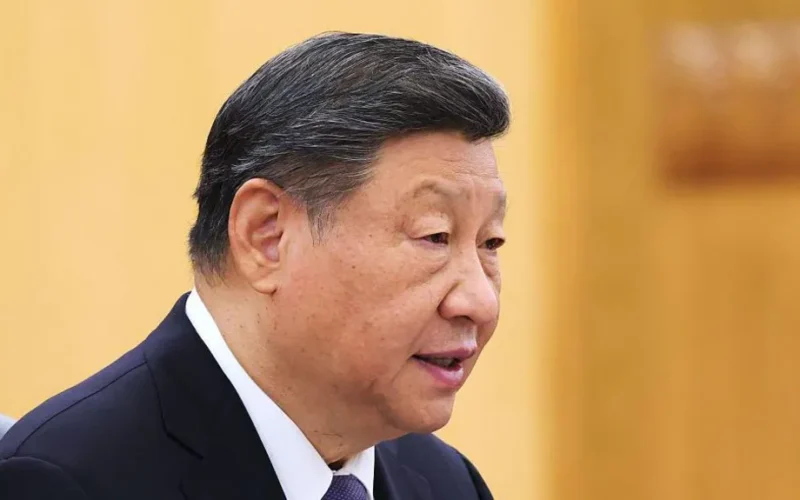
As the war in the Middle East enters its second month, it is blocking global energy routes and causing oil prices to rise to record levels. China has officially joined the fight as a main peacemaker.
This is a very important time for the move to happen. U.S. President Donald Trump has said in public that military action against Iran could end in “two to three weeks,” but the rest of the world is still unsure about what a “post-war” reality would look like. In this gap, Beijing and Islamabad have come up with a joint “Five-Point Peace Plan” to get an immediate ceasefire and reopen the important Strait of Hormuz.
The Pakistan Factor: An Unlikely Alliance
Pakistan has unexpectedly become the main mediator, and reports say that the Trump administration is listening to them. Islamabad has always had ties to Washington, but Beijing is helping Islamabad a lot with both politics and diplomacy.
Zhu Yongbiao, director of the Centre for Afghanistan Studies at Lanzhou University, says, “China is giving full support in the hope that Pakistan can play a more unique role.” For Beijing, supporting Pakistan is a strategic shift away from its usual quiet response to conflicts in the Middle East and toward active, high-stakes involvement.
The “Bloodline” of the Economy: Why China is Getting Involved
Beijing’s sudden need for diplomacy comes from the harsh reality of the economy. The war has messed up a supply chain that China worked on for decades.
China is Iran’s biggest trading partner and buys about 80% of all Iranian oil exports.
Regional Investment: Chinese infrastructure companies like Power Construction Corp are deeply involved in the region, from electric vehicle markets to huge desalination plants in Saudi Arabia and the UAE.
The “Toy-to-Tech” Crisis: The rising cost of oil is having an impact on everything from the plastics used to make toys to the raw materials needed to make semiconductors and batteries for electric cars.
Xi and Trump are rivals at the table
This peace proposal comes at the right time. It comes just weeks before a very important meeting between Xi Jinping and Donald Trump. Beijing is trying to get the most leverage possible before important trade talks with Washington by calling itself the “stability broker.”
China has been able to help settle disputes in the past, like the 2023 reconciliation between Saudi Arabia and Iran. However, this conflict is much harder to deal with. China doesn’t offer military support or security guarantees like the U.S. does. The only thing it has is economic interdependence.
The “Five-Point Plan” vs. the War on the Ground
The Chinese-backed plan is more about “return to trade” than “regime change.” But the plan has a huge problem: the U.S. and Israel are both determined to stop Iran from getting nuclear weapons.
Zhu says, “China is careful not to get involved in bigger military conflicts.” “Its main goal is still to improve the economy at home and abroad.”
The Decision: A New Way of Doing Diplomacy?
If the Beijing-Islamabad plan works, it would be a huge shift in global power, showing that peace in the Middle East can come from Asia instead of the West. But with U.S. troops getting ready to attack Kharg Island from the ground and Iran threatening a “Rain of Fire,” the “Five-Point Plan” may be the last chance for the world to avoid a total energy depression.
Beijing is no longer a quiet partner in the Middle East. China is trying to change the rules for settling conflicts in the 21st century by using its position as Iran’s biggest customer and Pakistan’s closest ally.
