

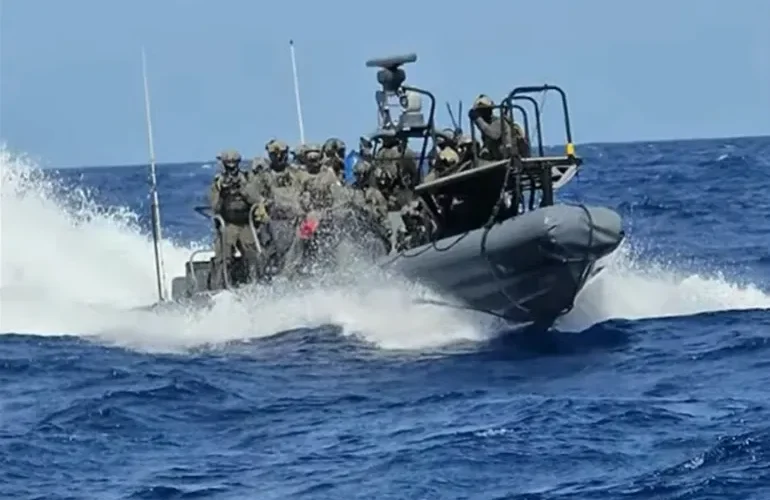
An international aid mission bound for the besieged Gaza Strip has turned into a high-stakes standoff in the Mediterranean Sea. Legal advisers and organizers representing the Global Sumud Flotilla have confirmed that multiple civilian vessels had their communications aggressively jammed at the very start of an unexpected Israeli military operation.
The sweeping electronic interference has reportedly cut off crucial safety channels, leaving hundreds of peace activists and humanitarian workers stranded in international waters with limited ability to call for help.
Electronic Warfare on the High Seas: What Happened?
According to Bader al-Noaimi, a prominent member and co-leader of the flotilla’s legal team, the interception began with an immediate and sophisticated communications blackout. Speaking to Al Jazeera, al-Noaimi revealed that the targeted jamming disrupted navigation arrays and radio frequencies across several vessels in the humanitarian fleet.
Reports from the region indicate that the military utilized advanced electronic interference tactics, including intentionally broadcasting distracting audio and songs over critical radio frequencies to drown out civilian emergency channels.
The intentional severing of communication lines has raised severe safety concerns. Without functional radios or satellite links, the boats are effectively blinded, unable to properly coordinate with one another or send standard SOS signals to nearby maritime authorities.
The Legal Arena: International Waters and the Obligation to Respond
The physical location of the incident has ignited an intense international legal debate. The Global Sumud Flotilla organizers maintain that their fleet was navigating strictly through international waters when the naval warships closed in. Specifically, the vessels were sailing within the official Cypriot search and rescue zone.
According to al-Noaimi, this specific geographical positioning carries immense weight under international maritime law:
“What is happening is based on a historical pattern of violence executed by the Israeli regime. We have been making distress calls since the start of the attack. So far, we have not received a response.”
Because the civilian ships are operating within Cyprus’s designated search and rescue perimeter, the legal team argues that Nicosia (the Cypriot government) is under a direct, legally binding obligation to respond to the ongoing distress calls. The current silence from regional Mediterranean authorities has left passengers feeling deeply vulnerable to unchecked enforcement on the open ocean.
Ghost of the Floating Prison: Activists Fear a Repetition of Abuse
The intense anxiety gripping the passengers isn’t without precedent. This latest naval operation follows a highly controversial interception that took place in late April. During that previous encounter, international activists attempting to deliver aid to Gaza were intercepted, detained, and transferred onto an Israeli naval vessel described by critics as a “floating prison.”
Passengers from that April mission later came forward with horrific accounts of their time in custody, alleging that they were subjected to severe physical abuse and treatment that legally amounted to torture before eventually being handed over to Greek authorities for deportation.
With the current fleet facing a similar military boarding action, those onboard fear a repeat of that exact playbook. Reports indicate that naval forces are systematically boarding civilian vessels, detaining activists, and preparing to transport them to the Israeli port of Ashdod.
The Broader Context: The Ongoing Naval Blockade of Gaza
The Global Sumud Flotilla represents a massive, multi-nation coalition of activists, human rights defenders, and medical professionals from dozens of countries. Their explicitly stated goal is to peacefully breach the long-standing naval blockade of the Gaza Strip to deliver critical medical supplies, food, and basic necessities to a civilian population still reeling from prolonged conflict and severe shortages.
While international bodies and regional neighbors like Türkiye have repeatedly condemned the naval interceptions as acts of “illegal high-seas piracy,” the stance from the other side remains rigid. Top leadership has consistently authorized the military to take any measures necessary to prevent unauthorized vessels from reaching the Gaza coastline, viewing any attempt to breach the blockade as a direct security violation.
As the communications blackout continues to obscure the full scope of what is happening on the water, human rights organizations worldwide are calling on Mediterranean governments to intervene before the civilian standoff escalates further.
