


For millions of people, “pollen season” typically means a few weeks of itchy eyes and a runny nose. But the situation is different in 2026. Experts warn that climate change is making allergies not only more annoying but deadly.
Our warming planet is supercharging the air we breathe, from the terrifying phenomenon of “Thunderstorm Asthma” to pollen seasons that now span months.
1. The Melbourne Catastrophe: When Air Turns Toxic
On November 21, 2016, the city of Melbourne, Australia, was the site of what scientists describe as a “catastrophic” health event. A huge thunderstorm rolled in and knocked out emergency lines. Hospitals were inundated with eight times the normal number of patients, and tragically, ten lives were lost simply because they couldn’t breathe.
What happened there?
“Thunderstorm asthma” – trillions of pollen particles were sucked up into the storm clouds and smashed into microscopic fragments with rain and lightning. When thrown back down to earth, these tiny bits were small enough to bypass the nose and throat and go straight to people’s lungs, causing instant, severe respiratory failure.
2. Extended Seasons, Taller Peaks
Melbourne’s extreme events are just one example; everyone else is feeling the “slow burn” of climate change. But rising temperatures are shifting the goalposts for allergy sufferers, say public health scientists like Elaine Fuertes of Imperial College UK.
Earlier Starts. Warmer winters mean plants start their reproductive cycles weeks earlier than they did 30 years ago.
Longer Growing Season Ragweed seasons in North America have gotten up to 25 days longer in some places in the past 20 years.
More Pollen: Elevated $CO_2$ is like “plant food” and weeds and trees are generating substantially more powdery pollen than historical averages.
3. The Ragweed Boom
Ragweed is one of the biggest offenders in the US and Europe. A single one of these plants can release a billion pollen grains. As urban heat islands grow and farmland expands, ragweed is finding more “nooks and crannies” to thrive in, affecting more than 50 million people in the US alone.
4. Your Immune System on Overdrive
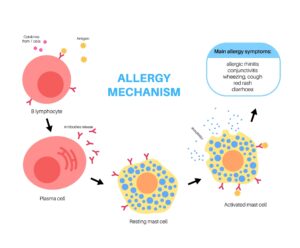
Hay fever is more than a physical reaction. It’s one of mistaken identity. Your immune system mistakes harmless pollen for a threat, like a virus or bacteria, and launches an assault.
We are exposed to “new” kinds of pollen and higher concentrations over longer periods, so even people who never had allergies before are beginning to develop symptoms. In 39 states in the US, forecasters predict that pollen levels will exceed the historical average in 2026.
The Verdict: A New Climate Paradigm
We must stop thinking of allergies as a nuisance. Extreme weather events are becoming more frequent and the temperature is rising and the air we breathe is becoming a battlefield. For the “allergic generation,” knowing the local pollen count and the weather is now a question of safety as well as comfort.
