


There used to be a very real wall between having an idea and actually building it. Unless you knew how to code, or had the budget to hire someone who did, most app ideas just stayed ideas. That wall is starting to crumble, and one of the platforms leading that shift is Emergent.
Instead of dragging boxes around a canvas or wrestling with templates the way older no code tools worked, Emergent lets you describe what you want in plain language and then builds it for you, frontend, backend, and all the logic in between.
What Makes Emergent Different From Typical No Code Tools
Most no code platforms that came before this generation still expected you to think like a builder. You had to understand layout grids, connect components manually, and configure logic through dropdown menus and settings panels. It removed the need to write code, but it did not remove the need to think technically.
Emergent takes a different approach entirely. You simply type out what you want, something like a booking system for a small studio, or a dashboard that tracks inventory across three warehouses, and the platform interprets that request the way a development team would. Instead of one single AI trying to juggle every part of the job, it uses multiple specialized AI agents working together, each one handling a different piece of the process, from planning the structure to writing the actual code to testing it before it ships.
How the Build Process Actually Works
Here is roughly what happens once you describe your idea:
- One agent breaks your request down into a technical plan, figuring out what pages, features, and data structures the app will need
- Another agent focuses specifically on the interface, building out the buttons, layouts, and visual design
- A separate agent handles the backend, setting up the database and the logic that makes everything actually function
- As the build happens, you get a live preview so you can watch your app take shape in real time instead of waiting until the very end to see results
- If something breaks or behaves unexpectedly, the system can detect the issue by reviewing its own logs and attempt to fix it without you needing to debug anything yourself
That last part is worth highlighting. Traditional development often eats up huge amounts of time on debugging alone. Having a system that can catch and resolve its own errors mid build genuinely changes how fast an idea can move from concept to something usable.
You Actually Own What Gets Built
A common concern with AI powered builders is whether you are just renting access to something you can never fully control. That is not the case here. Everything Emergent generates is real, production ready code that belongs to you. You can connect it to GitHub for version control, download it, modify it further, or host it wherever you choose.
This matters a lot if your project grows. You are not locked into a closed ecosystem where your app only works inside one company’s walled garden. If a developer eventually joins your team, they can open the codebase and keep building on it like any normal project.
Who Actually Uses Something Like This
It is easy to assume tools like this are only for hobbyists testing an idea over a weekend, but the range of people using Emergent’s AI app builder is broader than that:
- Startup founders trying to get a working prototype in front of investors without hiring a dev team first
- Small business owners who need internal tools like inventory trackers or scheduling systems but cannot justify a custom development budget
- Freelancers and agencies building client projects faster so they can take on more work without burning out
- Non technical creators who simply have an idea and no interest in learning to code just to test it
For a startup especially, speed can be everything. Being able to validate an idea with a real working product in days rather than months can be the difference between catching a market opportunity and missing it entirely.
Pricing That Scales With How Much You Build
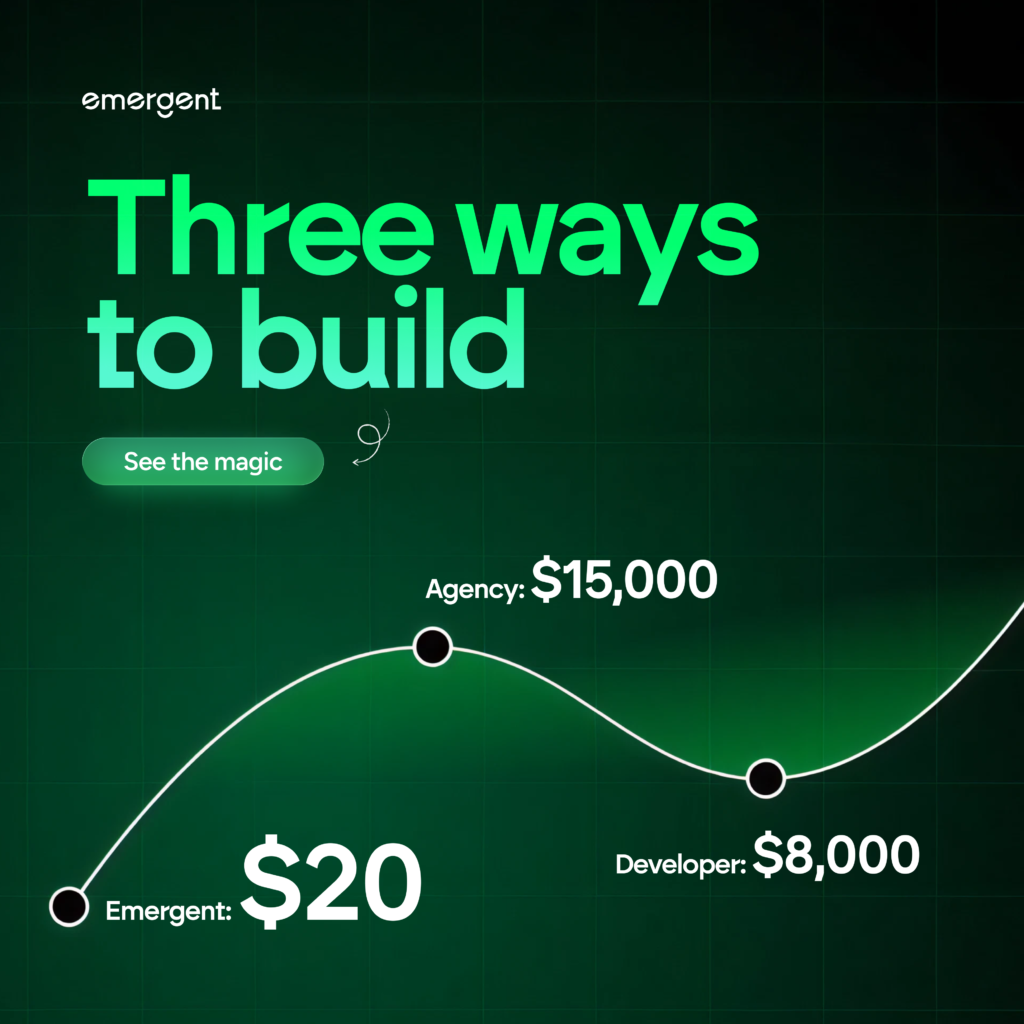
Rather than a flat subscription that charges the same whether you build one small tool or ten complex apps, the platform works on a credit based system. You get a certain amount of build capacity depending on your plan, and heavier usage simply requires more credits. This tends to work out well for solo builders and small teams who do not want to overpay for capacity they are not using, while still giving power users and teams the ability to scale up when their projects demand more.
Something Worth Knowing Before You Rely on It Fully
No AI tool is flawless, and it would not be fair to pretend otherwise. Like any fast moving platform, occasional hiccups can happen, and it is always smart practice to keep your own backups and version history for anything mission critical, the same way you would with traditional development work. Treating an AI builder as a serious speed advantage rather than a total replacement for good engineering habits will always be the safer approach.
Final Thoughts
The gap between having an idea and having a working product has historically been filled with months of planning, hiring, and slow iteration. Tools like this are compressing that timeline dramatically. Whether you are a founder racing to validate a concept, a small business owner who just needs a functional internal tool, or someone who has been sitting on an app idea for years without the technical skills to build it, this kind of platform removes the excuse of not knowing how to code.
If you have an idea sitting in your notes app right now, it might be worth typing it out and seeing what an AI development platform like this can actually do with it.
