

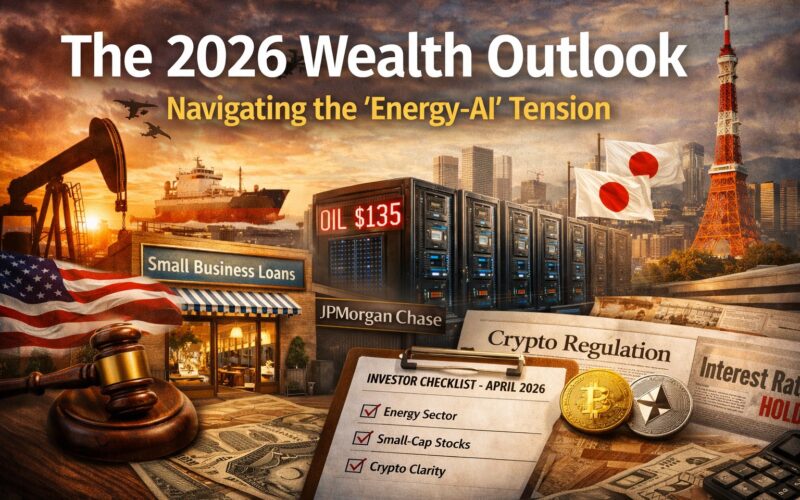
If 2025 was the year of “The Great AI Rally”, March 2026 introduced a sobering reality check. Investors are no longer just looking at GPUs and large language models; they are looking at the power grid.
As we close out the first quarter, the global economy is caught between a massive surge in technology-related investment and the inflationary pressure of a volatile energy market. Here is your general news briefing on the finance and investment landscape for 2026.
1. The Energy Shock: A Test for Big Tech
The most significant market mover this month has been the disruption in the Middle East, specifically the halt in shipments through the Strait of Hormuz.
- The Impact: Oil prices have surged towards the $135 per barrel mark, causing significant disruptions in equity markets.
- The AI Connection: This isn’t just a “petrol” problem. The data centers—the backbone of the AI revolution—require vast amounts of electricity. Analysts at S&P Global now warn that the $635 billion that Big Tech planned to spend on AI infrastructure in 2026 may face “meaningful corrections” if energy costs don’t stabilise by mid-year.
- The Silver Lining: US-based energy, chemical, and defence stocks have bucked the downward trend, as investors seek “safe havens” with domestic supply chains.
2. The “American Dream” Initiative & Small Caps
Despite a cooling period for mega-cap tech stocks such as NVIDIA and Microsoft, mid-cap and small-cap stocks are performing well.
- Institutional Shift: Major banks, led by JPMorgan Chase’s “American Dream Initiative”, are pivoting toward local economic growth. This massive programme aims to support 10 million small businesses, focusing on local solutions for housing and financial health.
- Investment Takeaway: The “valuation gap” is finally closing. After years of being overshadowed by “The Magnificent Seven”, smaller, attractively priced companies are becoming the preferred play for diversified portfolios in Q2 2026.
3. Monetary Policy: The “Wait-and-See” Era
Inflation remains the “sticky ghost” of 2026. While Goldman Sachs projects US inflation to cool to 2.2% by the end of the year, the OECD warns that energy spikes could keep G20 inflation as high as 4.0%.
- Central Banks: The Fed and the Bank of England have largely stayed on hold this March. The era of “cheap money” isn’t coming back yet, but three 25-basis-point cuts are still anticipated for the second half of 2026.
- The Japan Pivot: In a rare move, the Bank of Japan is accelerating rate hikes, aiming for a policy rate of 1.5%—a significant signal that the decades-long era of negative rates is firmly in the rear-view mirror.
4. Crypto Reaches “Landmark” Clarity
March 2026 is expected to be remembered as the month when the “Wild West” of crypto came to an end.
- The SEC-CFTC Accord: In a landmark move, the SEC and CFTC issued a joint “Comprehensive Interpretation” of how US securities laws apply to crypto assets.
- Why it matters: This provides the first authoritative taxonomy for digital assets. It clarifies that Bitcoin, Ethereum, and payment stablecoins have a clear regulatory path, while “incentivised tokens” will face stricter oversight.
- Institutional Entry: With this clarity, we are seeing the first wave of pension funds and conservative institutional investors finally allocating small percentages to “tokenised securities”.
Investor Checklist for April 2026:
- Watch the Grid: Monitor energy-sector earnings; they are now the “lead indicator” for tech growth.
- Small-Cap Rotation: Consider rebalancing into mid-cap value funds that benefit from domestic industrial growth.
- Taxes & Legislation: Keep an eye on the “One Big Beautiful Bill Act” in the US, which includes tax cuts that could boost household spending by 1.5%.
- Crypto Quality: Stick to the “Big Three” (BTC, ETH, and stablecoins), as the new regulatory framework favours established, high-liquidity assets.
Final Verdict
The theme for 2026 is “Pragmatic Growth”. The “hype” phase of AI is over, and the “delivery” stage has begun—but it’s being tested by a complex geopolitical environment. Successful investors this year aren’t chasing the next big thing; they are protecting their gains by staying diversified across energy, tech, and domestic industrials.
