

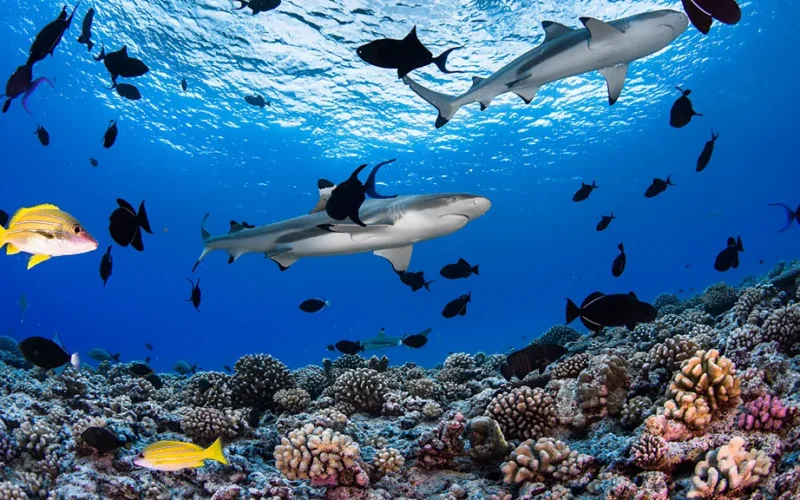
The traditional beach holiday is officially being traded out for the “Big Blue” for the modern traveller. According to new data from PADI Worldwide, advanced scuba certifications are up 50% as travellers want to get out from behind the shoreline and into the world’s purest marine ecosystems.
The technicolour reefs of the South Pacific or the migration “superhighway” of Mexico – these six destinations are at the forefront of underwater exploration in 2026.
1. Fiji: The South Pacific’s Neon City
Fiji, the “Soft Coral Capital of the World” for centuries, is having a renaissance in 2026 with new eco-conscious experiences. The visual impact is unparalleled; more than three-quarters of the planet’s coral species live in these waters.
The Draw Slack tide is the magic time, the gold standard, at the Great White Wall where white soft corals ‘bloom’ in spectacular fashion.
2026 Innovation: Now, the deep, dark waters of the Somosomo Strait are drawing crowds to Blackwater Dives, where powerful lights pull bioluminescent creatures from the depths, giving divers a “science fiction” vibe.
2. Baja California Sur: Mexico’s Marine Freeway
The southern tip of Mexico’s Baja Peninsula has emerged as the premier destination for “Mega-Fauna” enthusiasts.
Seasonal Spectacles: Mobula Ray season (April–June) is wrapping up, and excitement is mounting for the Striped Marlin hunt in October.
Acoustic Experience: In early 2026, divers heard the songs of migrating Humpback whales so clearly they could “feel the vibration” in their regulators.
3. French Polynesia: The World’s Shark Sanctuary
By June 2026 French Polynesia plans to expand its existing MPA by a further 500,000 sq km, cementing its place as the world’s safest sanctuary for apex predators.
The High: Flying through the south channel of the Fakarava Atoll, where the “walls” of hundreds of Grey Reef sharks are following the current.
The Sightings: This season has yielded more frequent rare sightings of Great Hammerheads, rewarding those who venture into these UNESCO Biosphere Reserves.
4. Raja Ampat, Indonesia: The Crown Jewel of Biodiversity
For the “eat, sleep, dive, repeat” crowd, Raja Ampat is still the ultimate in liveaboard diving.
The Numbers: 600 species of hard coral, 1,700 species of fish.
The Experience: Cruising the karst islands aboard a traditional wooden Phinisi yacht. By 2026, private luxury charters like the Celestia are offering “research-integrated” trips, where guests can help tag manta rays.
5. Florida, USA: The New Wreck Diving King
Florida is diving into 2026 with plans for the world’s most ambitious artificial reefs.
The Record Breaker The retired ocean liner SS United States — a near-1,000-foot behemoth — is scheduled to be sunk off the Destin-Fort Walton coast later this year. It will pass the USS Oriskany to become the world’s largest artificial reef.
Urban Exploration Miami’s Reefline, submerged art installation, has been “colonized” by coral, a unique blend of culture and conservation just minutes from South Beach.
6. The Red Sea: High Definition History
The Red Sea remains the primary destination for technical and wreck divers. Visibility often exceeds 40 meters. The WWII era SS Thistlegorm is also a bucket-list site with submerged motorcycles and locomotives frozen in an underwater time capsule.
Why the switch?
Scuba diving really changes how people travel,” says PADI’s Kristin Valette Wirth. The attention has now shifted to “Regenerative Travel” in 2026, where divers are not passive spectators, but active participants in the protection of the reefs they visit.
Book Your 2026 Dive Expedition Here
